Majestic Tree Services New Brighton
Menu
Post-Storm Cleanup in New Brighton: Tree & Debris Removal
Storm Damage Cleanup New Brighton
Effective storm damage cleaning after a storm is vital to restoring safe living conditions and normalcy in your property in New Brighton after a bad weather event. We offer full-service cleaning at Majestic Tree Service New Brighton that will clean all hazards that are a result of the storm, as well as help restore your property to normal. This service is available to all residents of New Brighton, including but not limited to homes surrounding Long Lake Regional Park and neighborhoods throughout the Silver Lake District.
Understanding Storm Damage in New Brighton
Minnesota is known for its extreme weather patterns that frequently affect New Brighton with wind storms, ice storms, and heavy snow loads, causing significant storm damage to trees and leaving behind large amounts of debris. The potential for such extreme weather creates the possibility of transforming what were once beautiful tree-lined neighborhood streets into hazardous conditions requiring prompt professional action to clear the danger.
The amount of damage caused to trees by severe weather conditions varies widely depending on how severe the weather was. While some damage is limited to broken branches, other damage causes total failure of trees, which then creates larger cleanup operations that require an organized method to restore safety to residents while preserving the majority of the other valuable trees and landscaping features in the area.
Post-Storm Safety Assessment and Hazard Identification
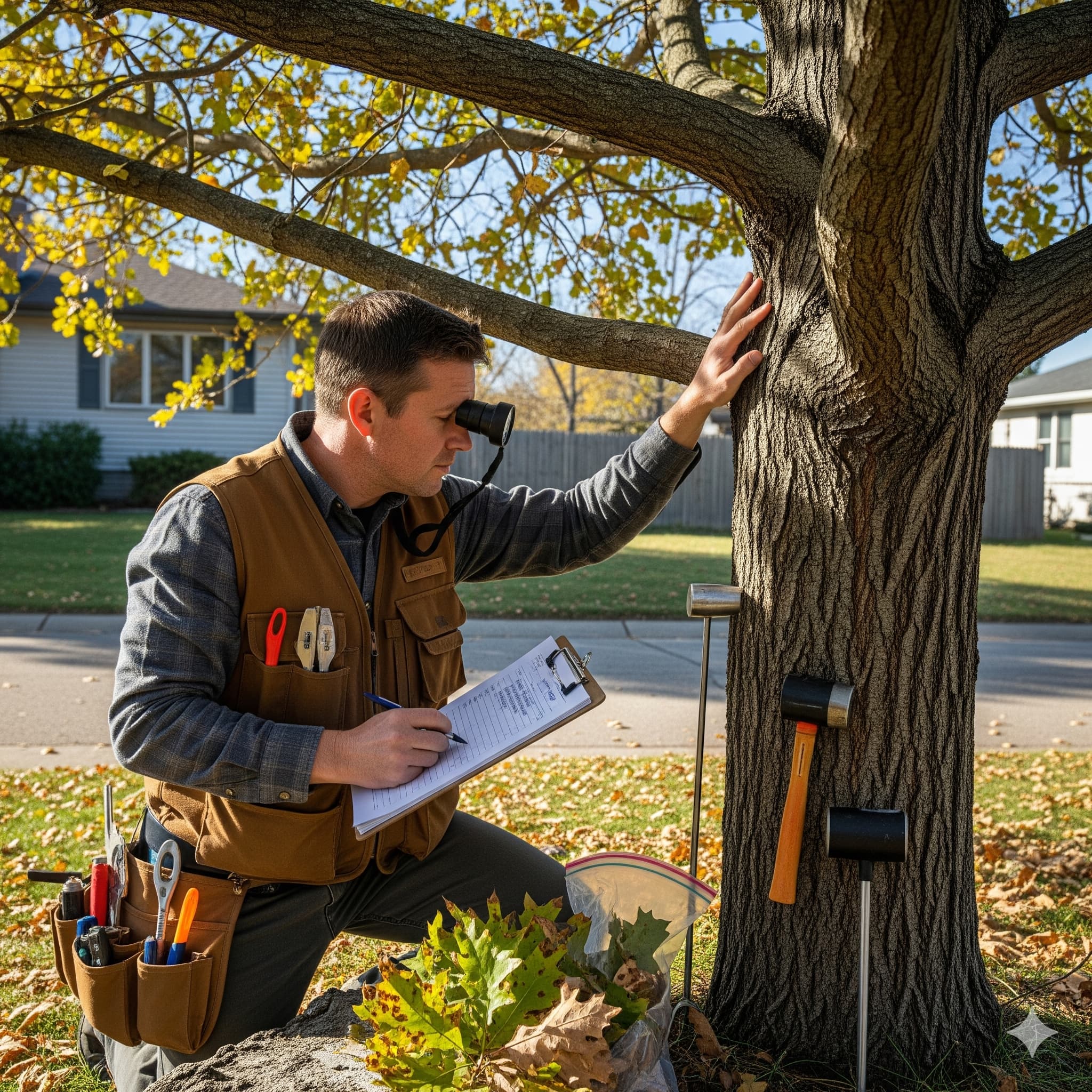
Once the storm has passed, it is essential to conduct a full safety assessment of the area to identify immediate hazards that need to be addressed before any cleanup operations begin. Some of the hazards include trees resting on buildings, obstructing emergency vehicle access routes, downed power lines, and unsecured tree parts that could fall at any moment. Based on the hazards found, the professional will prioritize cleanup activities based on risk to life, limb, and property, and to assist the city in maintaining the integrity of public infrastructure.
In addition to the above hazards, a safety assessment also identifies less obvious hazards. Examples include a tree that has partially failed (the trunk of the tree is still standing, but there is a visible split), a damaged but still attached branch, and root system damage that will likely result in a tree failure at a later date and should therefore be attended to immediately.
Emergency Vehicle Route Access Restoration
Access route restoration for emergency responders takes top priority in all post-storm cleanup operations. Trees that have fallen onto roads, driveways, or emergency access routes must be removed as quickly as possible to allow emergency responders to travel safely to all areas of New Brighton.
Access route restoration involves coordination with the city and utilities to ensure that cleanup operations will not interfere with the city’s ability to respond to emergencies and aid in the overall recovery effort of the entire community.
Organized Cleanup Methods
Assessment and Documentation of Damage
To assess and document the full extent of storm damage to trees and landscaping, it is essential to perform a thorough cleanup assessment. The assessment will provide the basis for determining the type of cleanup needed and the extent of the cleanup required. It will also provide the basis for documenting the damage for insurance purposes and provide the basis for documenting all cleanup needs for property owners.
Documentation includes photographs of the damage, detailed descriptions of the damage, and estimated costs for restoration work.
Tree Cutting and Debris Processing
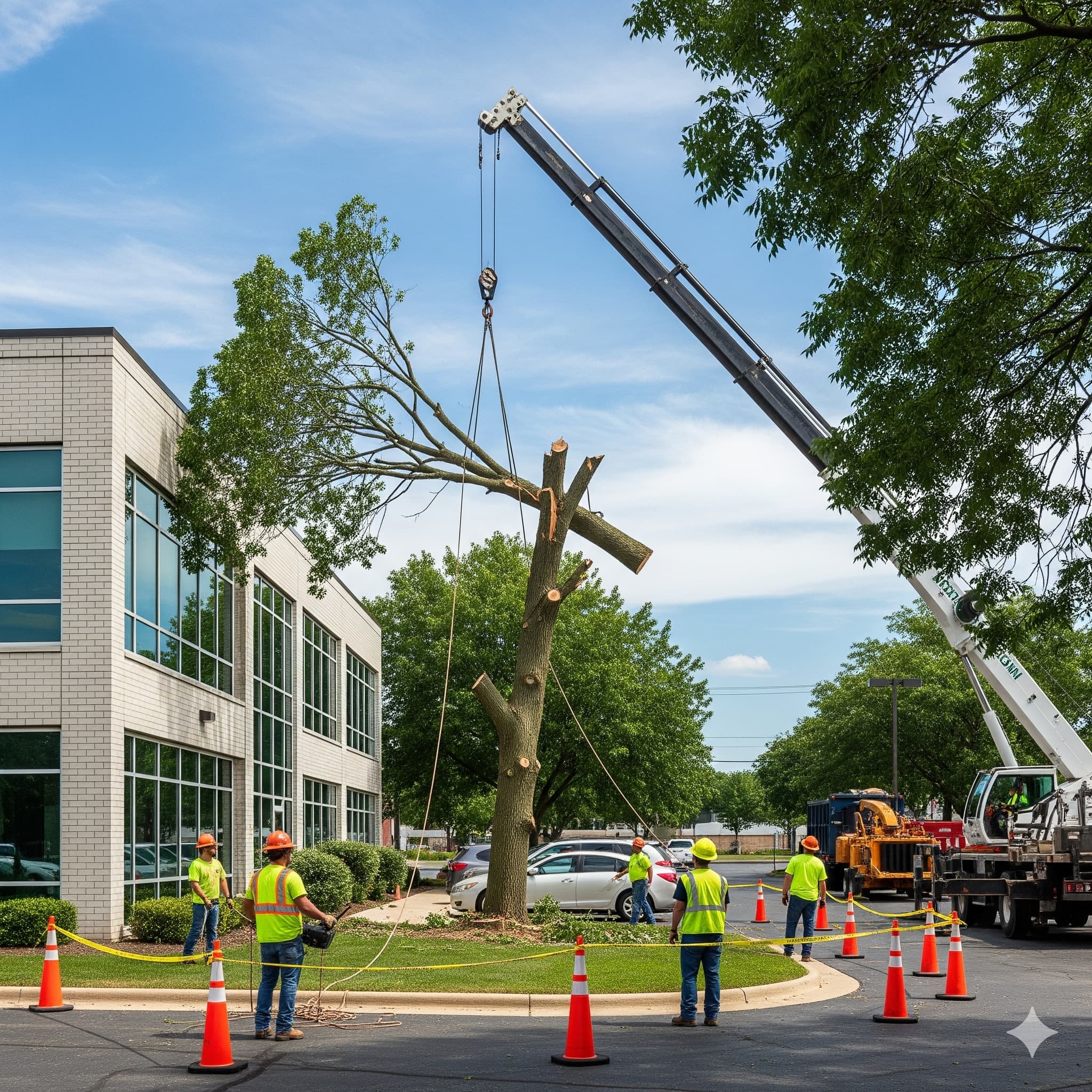
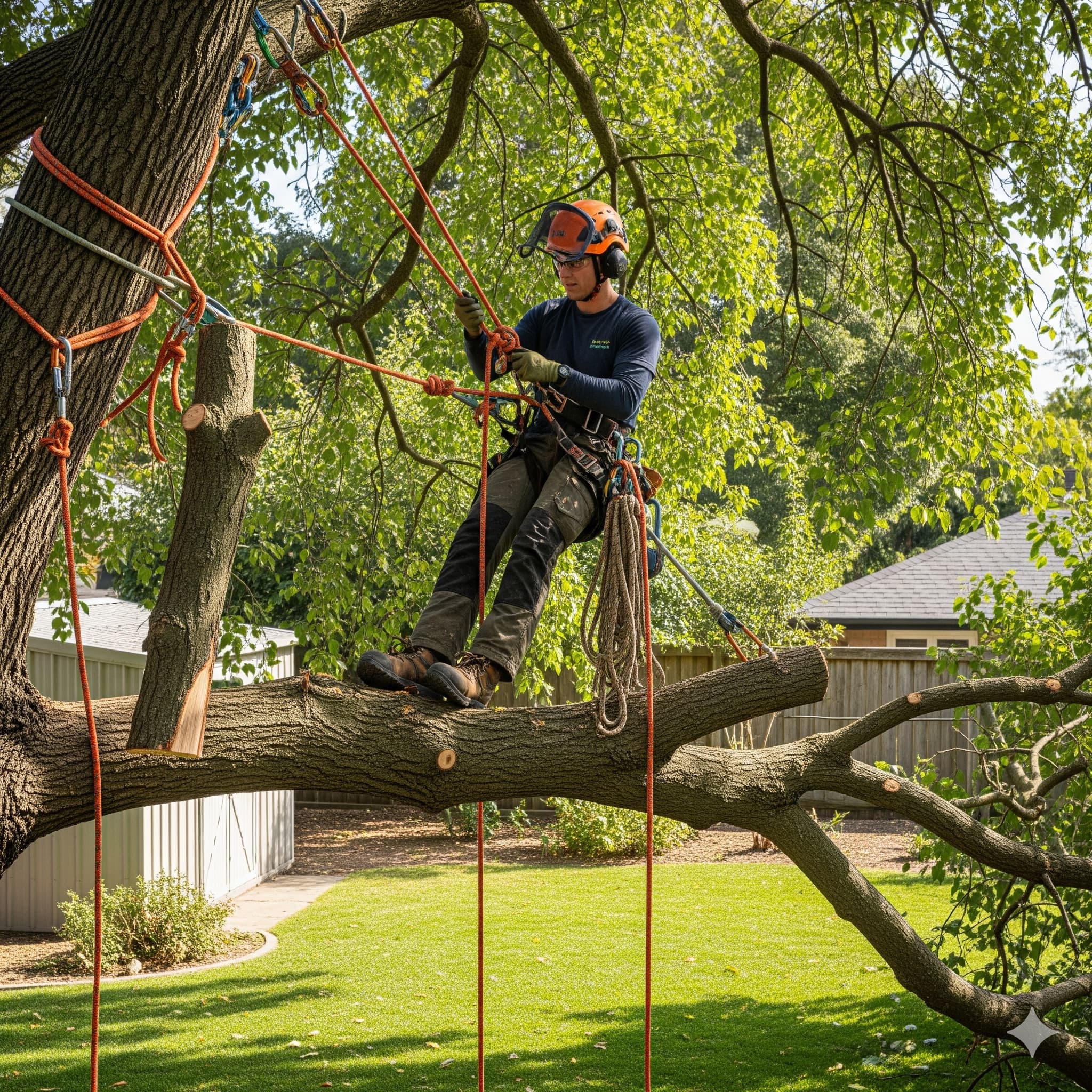
Trees damaged by storms require precise cutting techniques to remove them without damaging surrounding property. The goal of removing damaged trees is to cut the trees so they can be easily removed from the property. A professional arborist will take steps to minimize additional damage to the trees and to remove the trees as efficiently as possible.
Tree processing includes cutting the fallen trees into smaller pieces, separating the various materials to be disposed of correctly, and addressing the roots and stumps that remain after a tree has been cut down and can continue to present hazards or obstructions.
Debris Management and Disposal
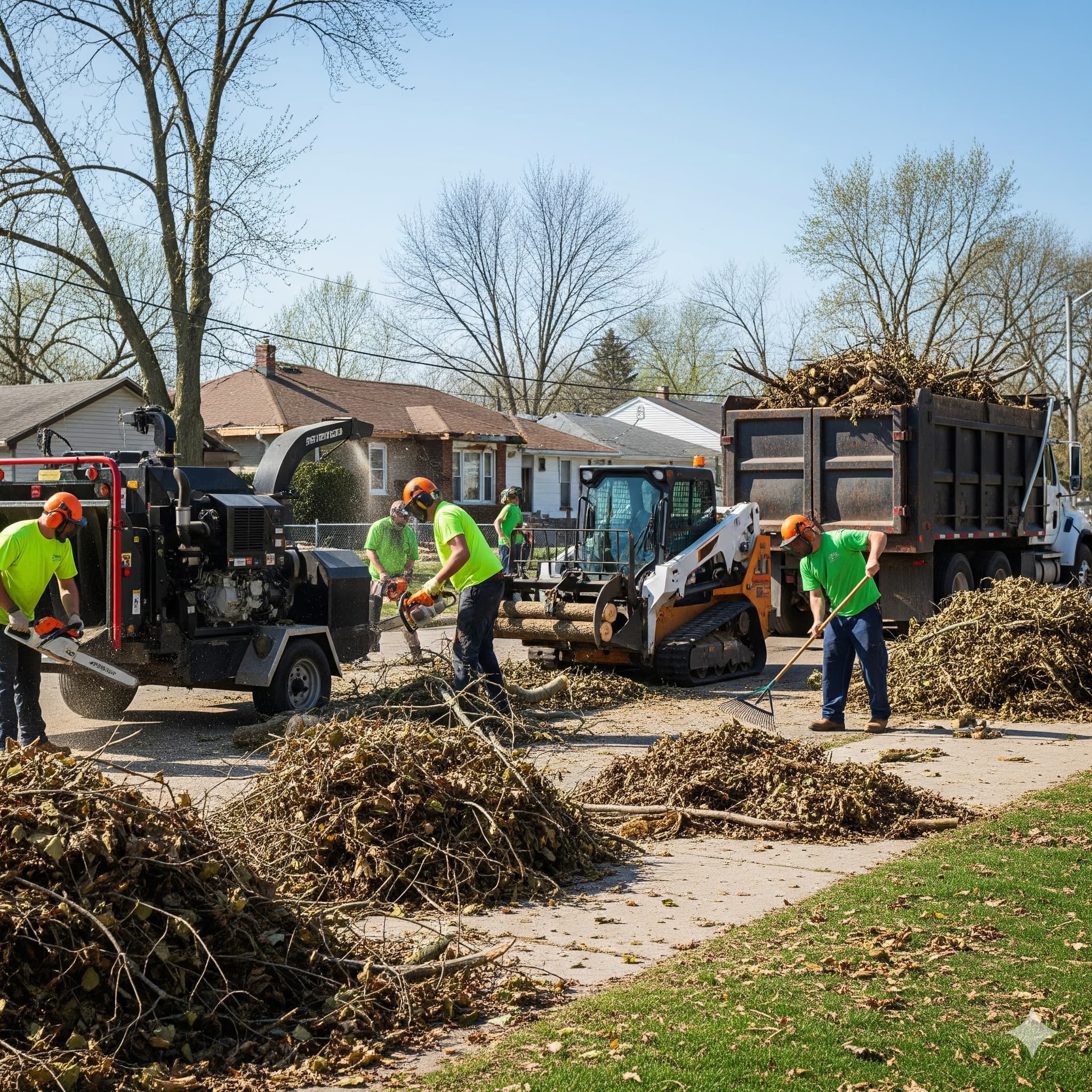
Organized post-storm cleanup also involves separating the various debris types to ensure that each is disposed of or recycled in the most environmentally responsible and cost-effective manner. Organic materials, including wood debris, leaves, etc., can be processed into a variety of reusable products, including mulch, compost, and firewood.
By maximizing the reuse of materials, professional debris processing ensures both environmental responsibility and cost-efficient cleanup operations.
Coordination with the City
Post-storm cleanup often requires coordination with New Brighton city services to obtain access to the city’s debris collection program, the city’s disposal sites, and to comply with local ordinances regulating debris collection and disposal. Professional cleanup services operate within established city programs to ensure that debris is collected and disposed ofefficiently and safely, while also supporting the city’s overall recovery effort.
City coordination includes understanding collection schedules, preparation requirements, and restrictions on debris disposal, to name just a few factors, that will enable efficient debris removal, while supporting city-wide recovery efforts.
Protection of Property During Cleanup
Storm cleanup operations must protect undamaged property features, including structures, vehicles, landscaping, and utility infrastructure. To this end, professional cleanup services utilize the most effective cleaning methods and equipment to minimize damage to undamaged property during the removal of debris.
Protecting property during cleanup includes the creation of designated work zones, utilizing protective covering when necessary, and utilizing equipment suitable for confined spaces, typical of residential neighborhoods throughout New Brighton.
Preservation of Landscaping Features
While storm cleanup operations aim to remove as much debris as possible in an efficient and timely manner, the goal is to preserve as many undamaged landscaping features as possible. In doing so, the cleanup operations balance efficiency with the preservation of the landscaping features of the property, including the health of the trees, shrubs, and lawn.
Landscaping feature preservation includes the careful operation of equipment, selective removal of debris, and measures to protect the soil, allowing for a speedy recovery of the landscape following the completion of the cleanup operation.
Insurance Coordination and Documentation
Storm damage cleanup operations usually involve insurance claims that require the documentation of the damage, the coordination with insurance company adjusters, and compliance with the terms of the policy for coverage and payment. Professional cleanup services work with insurance companies to simplify the process of filing a claim for damages.
Insurance coordination includes providing documentation, assisting in the adjustment of claims, and assuring that cleanup activities comply with insurance requirements for coverage and reimbursement.
Documenting Costs and Payment
Accurate documentation of the costs associated with the cleanup services provided allows for the accurate payment of those costs by the insurance company and provides transparency of costs to the property owner. In addition to providing accurate documentation, the cleanup services provided must be documented in detail, including photographs of the work performed, detailed descriptions of the work performed, and the time spent performing the work.
Accurate documentation and detailed descriptions of the services providedsupports the property owner in their insurance claim and assist in the identification of the extent of the damage and the type of cleanup activities required to restore the property.
Environmental Concerns
All storm cleanup operations must be done in a manner that minimizes harm to the environment. Environmental concerns include water quality, soil protection, and preservation of wildlife habitats. By doing cleanup operations in a responsible manner, professional cleanup services can minimize harm to the environment and complete the cleanup operations in an efficient manner.
Methods to protect the environment include controlling erosion, using proper disposal methods, and timing the cleanup operations to avoid harming sensitive environmental features.
Protection of Soil and Water
Heavily used equipment during storm cleanup can cause soil compaction and erosion if not operated in a controlled manner. Professional cleanup services utilize equipment that operates in a manner that does not compact the soil or harm water quality.
Water quality protection includes preventing debris and pollutants from entering storm drains, streams, or other bodies of water, and operating cleanup activities near sensitive areas, such as Long Lake, in a manner that protects water quality.
Planning for Future Storm Recovery
Cleanup operations following a storm must not only focus on the cleanup of the storm debris, but also on the long-term planning for the recovery of the landscape. Professional cleanup services can assist property owners in developing plans for replanting and improving the landscaping.
Planning for future storm recovery includes evaluating the property to determine the best location for new plants and selecting plant species that will thrive in the area and withstand future storm damage. Plans also include designing the layout of the new plants to meet both aesthetic and storm resistance goals.
Replacing Damaged Trees
Storm damage to trees offers a rare opportunity to improve the landscaping of a property through the strategic replacement of damaged trees. Property owners can benefit from the advice of a professional regarding the selection of tree species and the best locations to plant trees to enhance the property value and storm resistance of the property.
Planning for replacing damaged trees includes assessing the property to determine the best location for new trees, selecting tree species that will thrive in the area, and scheduling the planting of new trees to coincide with the optimal planting times to ensure successful establishment and contribute to the recovery and enhancement of the urban forest in New Brighton.
Managing Equipment and Resources
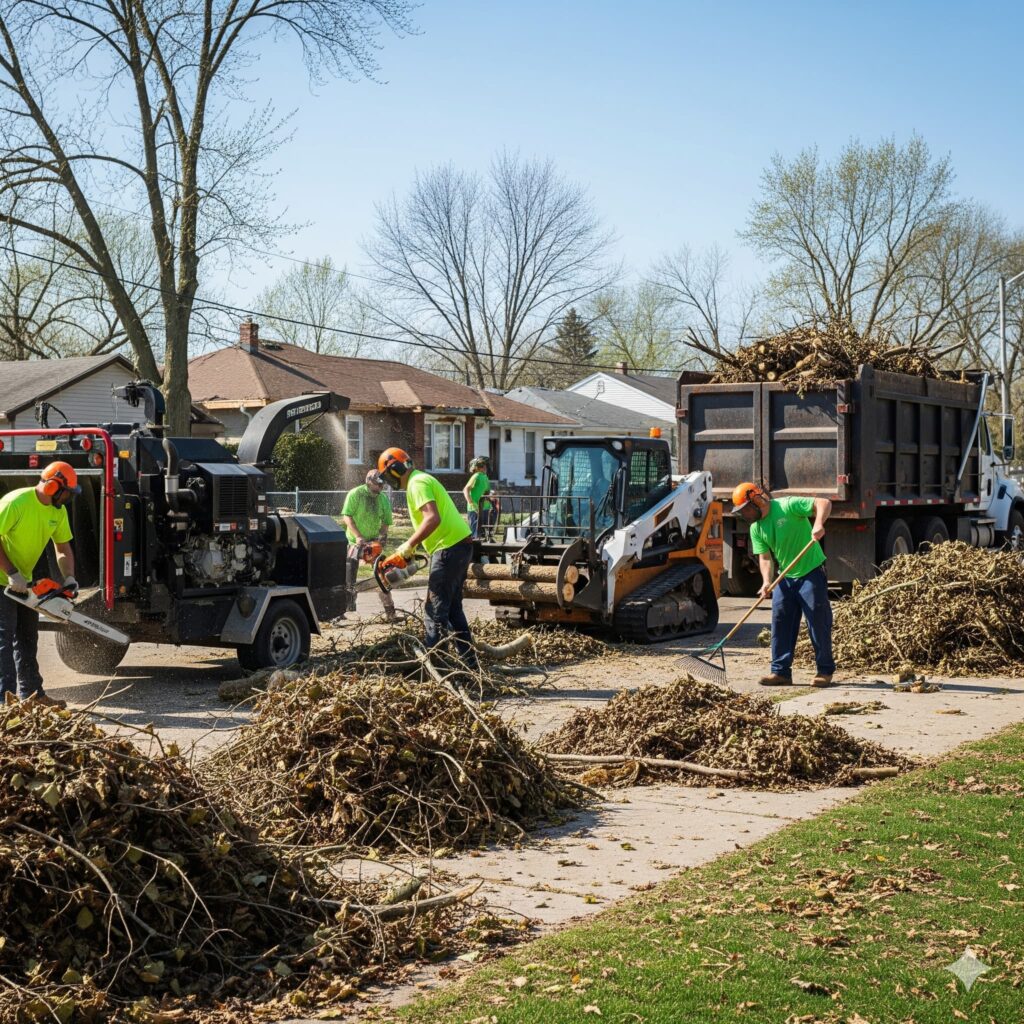
A major storm event in New Brighton requires a great deal of specialized equipment and coordinated resource management to effectively clean up the large volumes of debris resulting from the storm event. Professional cleanup services maintain a fleet of specialized equipment specifically designed to process and remove large volumes of organic debris efficiently and safely.
Selection of equipment is determined by the types of debris to be processed, accessibility to the debris, and the objectives of the cleanup operation. Professional cleanup services utilize equipment that will allow them to efficiently and safely clean up debris while minimizing property damage.
Specialized Cleanup Equipment
Storm cleanup equipment includes chipper equipment, grinding equipment, loaders, and vehicles specifically designed for the processing and removal of large volumes of organic debris. Using this type of equipment, professional cleanup services can efficiently and safely process and remove large volumes of debris that homeowners cannot accomplish using standard tools and equipment.
Operation of specialized cleanup equipment requires highly skilled and trained operators familiar with the capabilities of the equipment and the safety procedures involved with using the equipment in storm-damaged areas where the usual operating conditions do not apply.
Coordinating Community-Wide Recovery Efforts
Major storm events that impact New Brighton require a community-wide response to recover from the disaster. Professional cleanup services partner with city officials, service providers, and volunteer groups to coordinate the community-wide recovery efforts. Coordinated community-wide recovery efforts will ensure that the community has access to sufficient resources and that all areas of the community are treated equally during the recovery efforts.
Coordinated community-wide recovery efforts will enable cities to prioritize the cleanup activities, eliminate duplication of effort, and ensure that all areas of the community are treated equally during the recovery efforts.
Combining Volunteer and Professional Cleanup Activities
Many storm recovery efforts involve both professional cleanup services and volunteer assistance. Professional cleanup services collaborate with volunteer organizations to coordinate cleanup activities, provide guidance, and ensure that cleanup activities are conducted in a safe manner.
Combining professional and volunteer efforts will allow the community to maximize the utilization of available resources and ensure that complex or hazardous cleanup activities are carried out by qualified personnel with the necessary equipment and liability insurance coverage.
Ensuring Quality and Completeness of Cleanup Work
Professional storm cleanup services ensure that quality standards are met to guarantee that all debris is completely removed and all sites are restored to pre-storm condition. Quality assurance includes conducting regular inspections of the work completed and correcting any deficiencies identified during the inspection.
Completing the cleanup work also includes meeting the standards for restoring the property to be prepared for future landscaping projects.
Implementing Preventative Measures Against Future Storms
Cleanup activities following a storm provide an excellent opportunity to implement preventative measures against future storm damage. Professional cleanup services can advise property owners on selecting tree species and placing trees in a manner that improves the property’s resistance to storm damage.
Preventative measures include identifying vulnerable areas of the property, recommending structural changes to the property, and establishing maintenance schedules that reduce the need for cleanup activities following future storm events.
Experienced Storm Cleanup Service Providers
Following a storm that results in damage to trees and debris throughout New Brighton, experienced professional cleanup service providers offer the knowledge, equipment, and coordination to facilitate an efficient and safe recovery. Experienced service providers ensure that the cleanup is conducted in a safe and efficient manner and that the cleanup meets the requirements of the insurance companies, municipalities, and emergency response agencies.
Our experienced crews understand the challenges presented by storm cleanup in residential neighborhoods and prioritize both efficiency and property protection.
LATEST POSTS