Majestic Tree Services New Brighton
Menu
Tree Disease Treatment: IPM Solutions in New Brighton
Tree Disease Treatment New Brighton
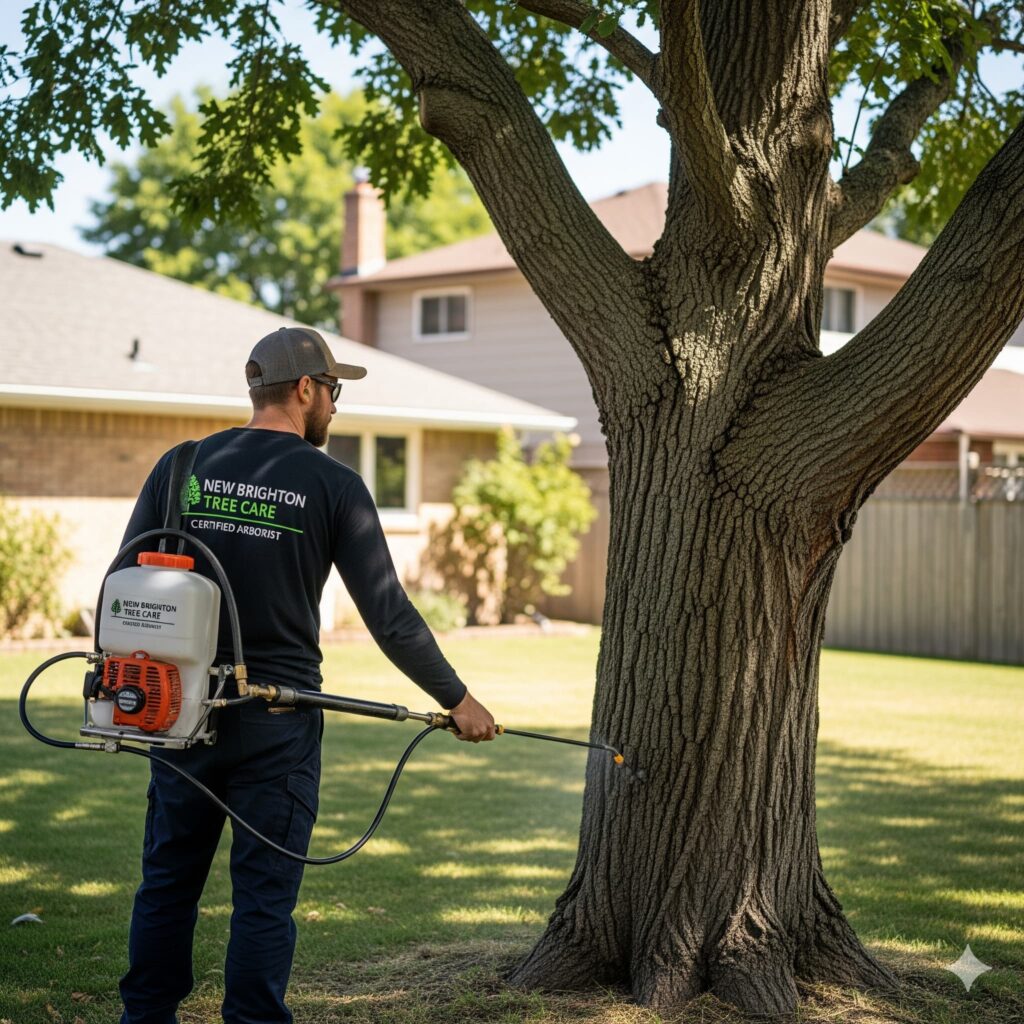
Integrated Pest Management (IPM) is a comprehensive approach to managing tree diseases in New Brighton, Minnesota. Our IPM approach at Majestic Tree Service New Brighton provides an environmentally conscious alternative to treat and maintain healthy trees from the downtown Historic New Brighton Depot Area to recreational areas surrounding Long Lake Regional Park.
Understanding Integrated Pest Management for Trees
Integrated Pest Management (IPM) refers to an all-encompassing approach to treating tree diseases that focuses on prevention, early detection, and minimally invasive interventions using the least toxic and most effective methods available for each disease problem. The goal of IPM is to eliminate dependence on chemical treatments, while still allowing for effective disease management that addresses both tree health and environmental sustainability.
Strategies for IPM take into account the biology of trees, the life cycle of diseases, and the effects of environmental conditions and human activities to create comprehensive management plans that address the underlying causes of disease problems rather than simply treating the symptoms of those problems.
Common Tree Diseases in New Brighton
Oak Wilt Management
Oak wilt is considered one of the most significant threats to the many oaks found in New Brighton. IPM approaches to oak wilt include a combination of prevention through education of property owners regarding pruning-timing restrictions and wound treatment during high-risk periods when sap beetles may transmit the disease, as well as early detection through regular monitoring and targeted treatments such as root-graft disruption and fungicide applications where deemed necessary.
The prevention aspect of oak wilt IPM involves providing property owners with information on pruning-timing restrictions and wound treatment requirements during the high-risk period when sap beetles may transmit the disease.
Dutch Elm Disease Control
Dutch elm disease management involves using integrated approaches that combine sanitation, vector control, and preventive treatments. Sanitation aspects of Dutch elm disease IPM involve eliminating breeding sites for elm bark beetles, and protective aspects of Dutch elm disease IPM involve providing preventive fungicide applications for valuable elm trees.
Early detection and prompt response are key elements of Dutch elm disease IPM that require routine monitoring and immediate action when symptoms begin to show to prevent further disease spread in elm populations.
Emerald Ash Borer Response
Although Emerald Ash Borer (EAB) continues to threaten ash trees in New Brighton, IPM approaches for EAB focus on using preventive treatments to protect high-value ash trees, while also managing infested ash trees to reduce EAB populations.
EAB management incorporates biological controls, chemical treatments for valuable ash trees, and sanitary measures to reduce overall EAB populations while protecting the most important ash trees in the area.
IPM Treatment Methods
Cultural Controls and Prevention
Cultural control methods represent the foundation of IPM disease management programs. Cultural control methods include proper irrigation, mulching, pruning, and site-maintenance practices that enhance tree health and reduce tree susceptibility to disease.
Cultural practices related to the New Brighton environment include managing soil moisture during drought periods, mulching to reduce stress on trees, and maintaining sufficient clearances around trees to enhance air circulation and reduce disease pressure.
Biological Control Integration
Biological controls use natural enemies of disease pathogens and insect vectors to provide sustainable, long-term management options. Biological control approaches function within the natural ecological systems of disease management by keeping disease levels below the threshold where damage occurs.
Examples of biological control strategies include promoting beneficial organisms, using biological fungicides when appropriate, and manipulating ecosystems to stimulate natural mechanisms for suppressing disease.
Chemical Application Timing and Targeted Use
When prevention and biological controls are inadequate, IPM programs use targeted chemical treatments applied at optimal times to maximize effectiveness and minimize environmental impacts. Chemical treatments used in IPM are selected based on disease identification and environmental conditions.
Targeted applications focus on protecting high-value trees, preventing disease from spreading during critical periods, and using the most selective materials available to control disease while reducing non-target effects.
Monitoring and Early Detection of Disease
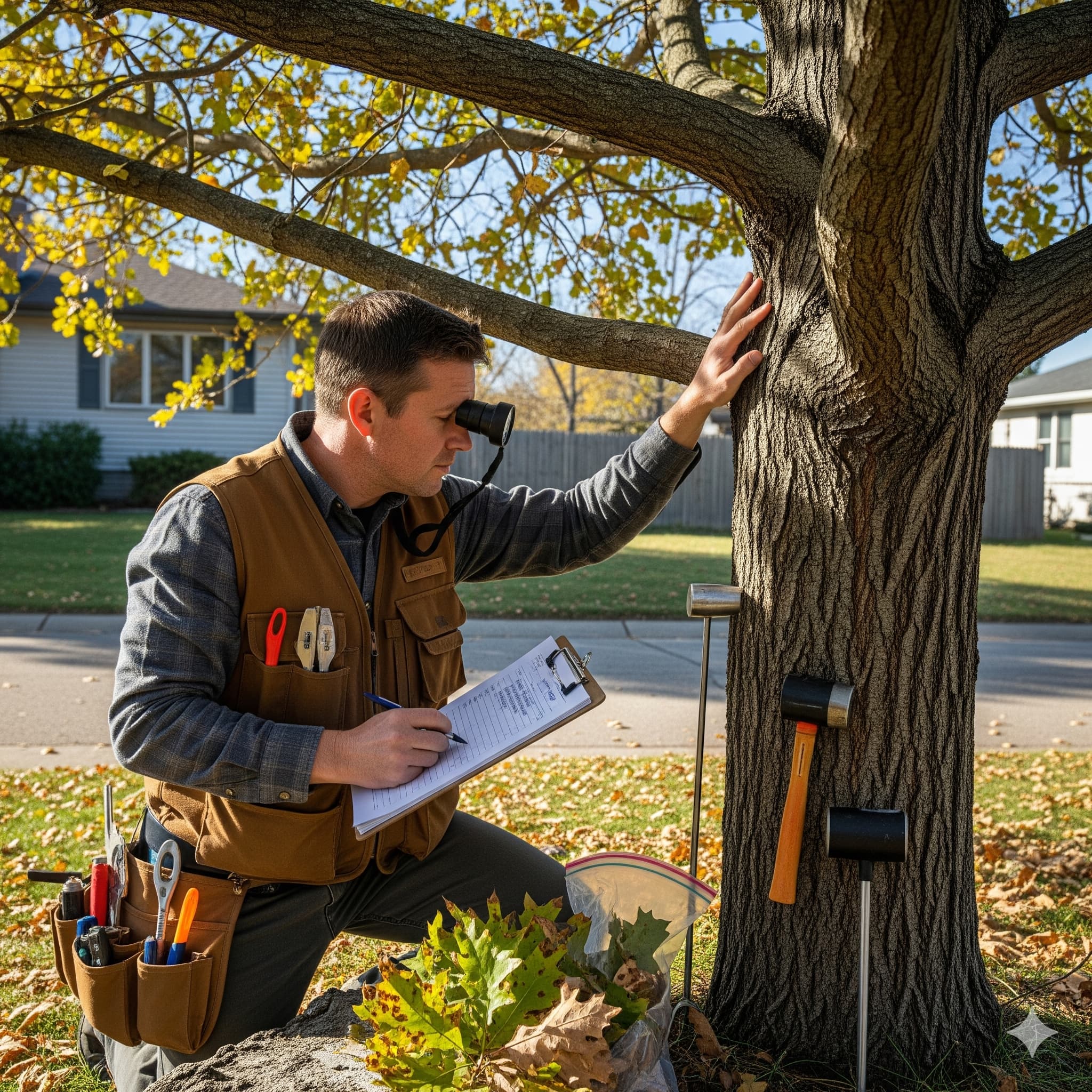
Routine monitoring and early detection of disease are required for successful IPM programs to identify disease problems before they cause extensive damage. Routine tree health assessment provides the opportunity for timely intervention using less-intensive management methods.
Professional monitoring techniques include conducting seasonal surveys, monitoring traps for insect vectors, and systematically evaluating tree health indicators to provide early warnings of disease problems developing.
Diagnostic Services and Verification
Proper identification of disease is essential to the effective implementation of IPM programs. Professional diagnostic services allow for accurate identification of disease problems so that treatments can be directed toward the specific disease causing the symptoms rather than addressing the symptoms themselves.
Verification of disease identification through laboratory analysis is essential for accurately selecting treatments and avoiding unnecessary or ineffective treatments that result in wasted resources and possible adverse effects on tree health.
Customized Planning for Sites and Populations
IPM strategies are developed for individual sites and tree populations based on tree species composition, environmental conditions, past disease problems, and management goals. Customization ensures that treatments are provided for specific site conditions and priorities.
When developing treatment plans for New Brighton sites and tree populations, several site-specific factors are taken into account, including soil type, microclimates, tree species diversity, and human activity patterns that influence disease development and treatment options.
Assessing Risk and Prioritizing Treatment Options
In IPM programs, management options are prioritized according to risk assessments that take into account the level of disease severity, the value of the tree(s), the potential for disease to spread, and the effectiveness of the treatment option. This approach optimizes resource allocation while addressing the highest-priority disease problems first.
Prioritization of management options enables property owners to focus their management efforts on trees and disease problems that will provide the greatest benefit for the investment in disease management measures.
Environmental Consideration
As part of the IPM approach to tree disease treatment, environmental responsibility is emphasized by reducing chemical use, protecting non-target organisms, and enhancing ecosystem health. Environmental responsibilities are especially critical in urban environments, where humans, animals, and wildlife come into contact with treated areas.
Protective measures for the environment include choosing the least-toxic treatment available, applying treatments at times that minimize environmental impacts, and using application techniques that limit drift and exposure to the environment.
Protection of Water Quality
Tree disease treatments near water bodies, such as areas surrounding Long Lake and other water bodies in New Brighton, require special consideration to protect water quality. IPM strategies include establishing buffer zones and restricting application times to prevent contamination.
Protective measures for water quality include selecting treatments with low water solubility, limiting applications during weather conditions that increase runoff risks, and establishing buffer zones around sensitive water features.
Optimizing Treatment Timing and Schedule
Effective IPM requires optimizing treatment timing relative to disease life cycles, vector activity patterns, and tree physiological status. Optimizing treatment timing maximizes treatment efficacy while minimizing environmental impacts and treatment costs.
Optimizing treatment scheduling takes into account seasonal influences, weather conditions, and tree stress levels to maximize treatment benefits and enhance tree health.
Seasonal Disease Management Programs
Most tree diseases require seasonal management programs that address different life-cycle stages or provide ongoing protection during vulnerable times. Seasonal programs often integrate multiple treatment methods for effective disease management.
Developing a schedule of repeated treatments over time allows property owners to budget for disease management expenses while providing continued protection for valued trees during the most critical periods of disease vulnerability.
Evaluation of Treatment Effectiveness
A major component of IPM programs is the evaluation of treatment effectiveness to ensure that disease management objectives are being achieved and to make recommendations for adjusting treatment strategies if necessary. Regular evaluations enable the optimization of treatment strategies over time.
Evaluation of treatment effectiveness includes monitoring treated trees for evidence of disease progression, evaluating treatment impacts on tree health, and documenting any changes in disease pressure that suggest program success or the need for revisions.
Implementation of IPM by Professionals
Implementing IPM disease management programs successfully requires professionals who possess expertise in disease identification, treatment options, application timing, and evaluation of treatment effectiveness. Ensuring that IPM approaches are implemented correctly and effectively will provide the best results for tree health and environmental protection.
We offer complete IPM-based tree disease treatment services in New Brighton by using a combination of prevention, monitoring, and targeted treatments that protect tree health while minimizing environmental impact. We strive to provide sustainable, long-term management solutions to preserve the urban forest of New Brighton.
The IPM approach to tree disease treatment offers effective, environmentally friendly methods for protecting New Brighton’s trees. Trust professionals who understand the principles of IPM and can design and execute comprehensive disease management programs that are specific to local conditions and meet the unique tree health needs of each location.
LATEST POSTS