Majestic Tree Services New Brighton

Menu
Tree Planting in New Brighton: Avoid Root Girdling
Tree Planting New Brighton
Proper tree planting techniques are important in growing healthy, living trees for years in New Brighton, as well as preventing root girdling, which is a key part of establishing a tree that will be a healthy, productive tree for many decades. Our professionals at Majestic Tree Services New Brighton can assist both residential and commercial customers with proper tree planting techniques from the time of planting so that the trees grow and thrive in areas, including new developments adjacent to Silver Lake Village, to older established neighborhoods surrounding Long Lake Regional Park.
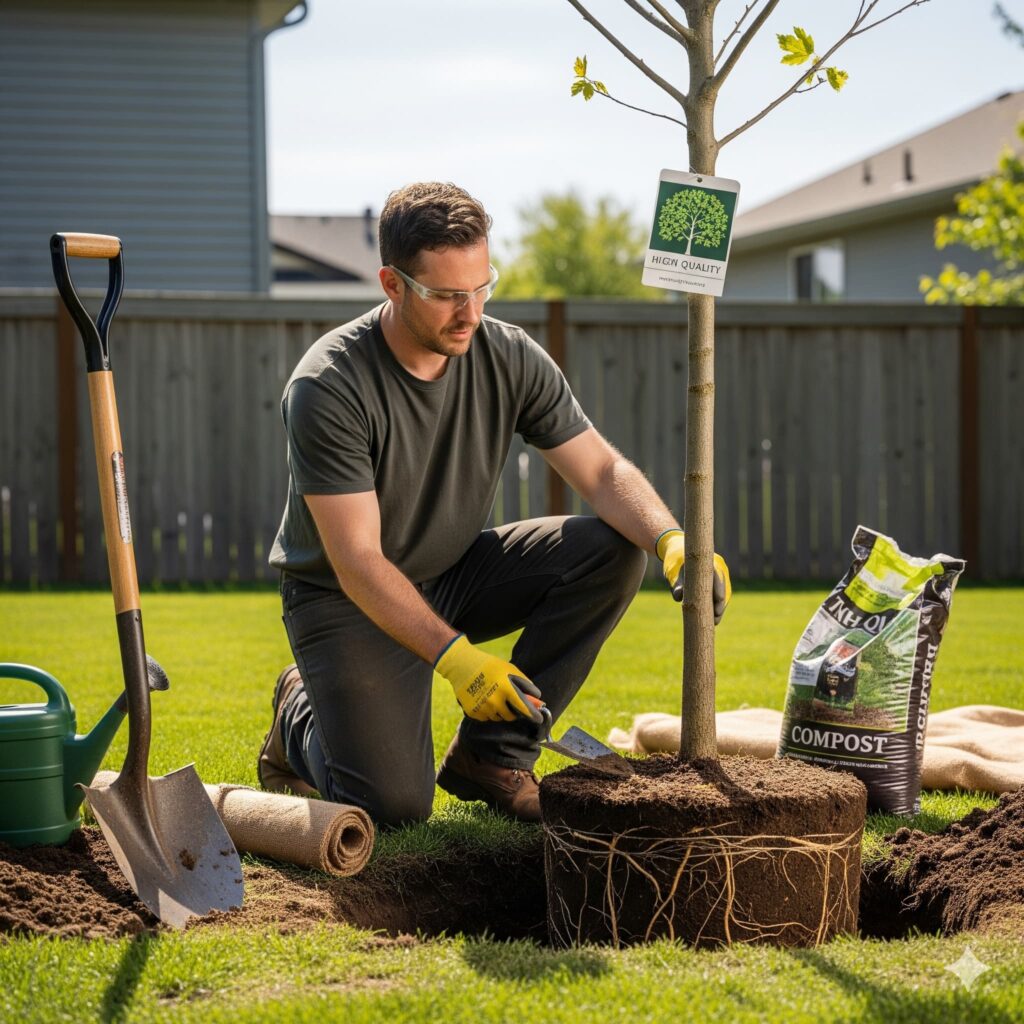
Root Girdling in Trees and Its Impact on Trees
Tree roots that encircle the trunk or branches of a tree will cause the tree to ultimately stop receiving the water and nutrients it needs to survive. Although this problem is generally the result of improper planting or container-growing procedures, it can take decades for symptoms to appear; thus, it is imperative that root girdling is prevented during the time the tree is being established.
Since trees in an urban environment, such as New Brighton,n will have additional stresses associated with being located in an urban environment (e.g., soil compaction, reduced root-zone space, etc.), prevention of root girdling is even more important in order to increase the chances of the tree surviving.
Common Reasons for Root Girdling:
Planting Too Deep
One of the most common reasons why trees experience root-girdling problems is due to improper planting. Treethatch are planted too deeply will cause the roots to grow up and around the trunk of the tree, causing a restriction of water and nutrients, and potentially killing the tree.
By planting trees so that the root flare (the area where the roots begin to flare out) is either at or above the soil line, you will allow the roots to grow outward instead of upward around the trunk of the tree.
Container Root Issues:
Trees that were grown in containers will often exhibit “circling” root growth, which is indicative of a problem with the root structure. If this issue is not addressed before planting the tree, it is likely to continue to affect the tree for many years and eventually strangle it.
When a certified arborist plants a tree, he/she will examine the container root system and correct any issues related to circling roots and will also attempt to spread the remaining roots to promote a natural growth pattern.
Poor Root-Zone Preparation:
The poor preparation of the root zone (i.e., soil preparation) and planting-hole construction can also cause trees to grow unnaturally, leading to root girdling. A narrow and deep planting hole or the use of highly amended backfill will cause the roots to grow in a manner that is conducive to root girdling.
Adequate root-zone preparation will enable the tree to grow healthy and outward, provide sufficient soil volume, and provide sufficient drainage for long-term tree health.
How to Prevent Root Girdling After You Plant Your Tree:
Proper Site Evaluation:
Before planting a tree, a site evaluation must be conducted. This evaluation will include a review of the soil, drainage, and existing underground utilities. In addition to reviewing the site itself, the evaluation will also assist in determining the best tree species for the location and assist in selecting the most effective planting method for the tree.
As New Brighton has a diverse range of soil types (from sandy soils near Long Lake to heavier soils in other neighborhoods), conducting a site evaluation will ensure that the planting method is consistent with the local conditions to optimize the establishment of the tree.
Use Appropriate Planting Holes:
When planting a tree, the planting hole should be twice to three times larger than the root ball of the tree, but not more than the height of the root ball. By creating a shallow and wide planting hole, you will allow the roots to grow laterally and minimize the likelihood of girdling root growth.
A wide planting hole will also facilitate the rapid establishment of the roots in the native soil surrounding the planting hole, rather than the roots becoming trapped within the amended backfill.
Root-Ball Inspection and Treatment:
Certified arborists will inspect the root system of the tree and make any necessary corrections to the circling roots and/or loose and/or compacted root balls. The treatments that will be performed on the root ball will vary depending upon the species of the tree and the type of container the tree was grown in, but all will focus on promoting natural growth patterns of the roots that will not form girdling roots.
Species Selection for New Brighton’s Climate and Soils:
Selecting the correct species of tree for the climate and soils of New Brighton will reduce the number of stresses experienced by the tree, and therefore, reduce the likelihood of root problems. Native and adapted species generally establish more readily and produce healthier root systems than poorly adapted species.
Certified arborists select tree species based on mature size, growth habit, preferred soil conditions, and local environmental conditions to provide species that will thrive in the planting location.
Climate-Suitable Species:
Due to Minnesota’s extreme temperatures, high winds, and irregular moisture levels, tree species that are tolerant of these conditions must be selected for planting. As a result, tree species that have been selected to withstand these conditions will establish more quickly and produce stronger and healthier root systems.
Native species (oak, maple, basswood, and ash, as applicable) generally perform well in New Brighton’s environmental conditions; however, many non-native species may struggle with the environmental stresses present in the region.
Techniques Used for Planting Trees:
Positioning of the Root Flare:
Proper positioning of the root flare is very important for preventing root girdling and supporting the long-term health of the tree. The root flare should be visible at the soil surface, allowing the roots to grow outward from the trunk of the tree.
Many trees are planted too deeply in nurseries and, therefore, must have the soil removed to expose the root flare before planting. Proper placement of the root flare will prevent root problems from developing in the tree.
Backfill and Amendments:
Modern planting techniques recommend utilizing native soils as backfills rather than utilizing heavy amendments that could act as a barrier to root growth. Native soils as backfills will encourage the roots to grow beyond the planting hole and into the surrounding soils.
Amendments should be used sparingly and incorporated throughout the planting area to eliminate the possibility of interface zones that would impede root growth.
Care of the Tree After It Has Been Planted:
Providing the right amount of care after the tree has been planted will support the development of healthy roots and allow for the identification of any root-related problems before they become serious. Regular inspections of the tree during its establishment phase will allow for early identification of any root-related problems and provide the opportunity for intervention to mitigate those problems.
Certified arborists will provide the right amount of care for newly planted trees, including adequate watering, mulching, and regular inspections to support the development of healthy roots and to monitor for any root-related problems that may arise.
Best Practices for Mulching Around Newly Planted Trees:
Mulching will help maintain the moisture in the soil, moderate soil temperatures, and reduce competition from weeds. However, improper mulching can also contribute to root problems, including girdling roots.
Mulch should be placed in a donut-shaped configuration around the tree, leaving a distance of approximately 6 inches between the mulch and the trunk of the tree to prevent excessive moisture accumulation and to prevent stem damage that can contribute to root girdling.
Maintenance of Root Systems Over Time:
Prevention of root girdling requires attention to the root system of the tree over its entire lifespan and not just during the initial planting process. Regular assessments of the root system and corrective actions will be necessary to ensure that the root system remains healthy and to detect any root-related problems that may arise.
Certified arborists will provide routine assessments of the root system and take corrective action to address any root-related problems that may be identified before they become severe enough to impact the health of the tree.
Identifying Developing Problems Before They Become Serious:
Recognizing developing root problems in trees prior to them becoming serious will provide the opportunity to take corrective action to address the root problems before they become life-threatening to the tree. Symptoms of potential root problems include slow growth rates, crown die-back, and visual evidence of girdling roots at the soil surface.
Certified arborists will provide routine monitoring of trees for these early indicators of potential root problems, and will take corrective action to address any developing root problems that may be identified.
Considerations for Urban Trees:
Trees in urban environments such as New Brighton will experience a variety of unique stresses, including limited root space, soil compaction, and infrastructure conflicts that may contribute to root problems. Professional planting techniques will accommodate these urban-specific stresses to enhance the success of tree establishment.
Trees in urban areas may require special techniques (such as structural soils, root barriers, or specially-designed planters) to accommodate limited growing space while minimizing the risk of root girdling.
Why Use Professional Tree Planting Services?
Professional tree planting services will utilize proper planting techniques that prevent root girdling and support the long-term health of the tree. Certified arborists will understand the complexities of successful tree establishment and will apply scientifically-supported techniques to maximize the success of the planting process.
We provide complete tree planting services for residents of New Brighton, and we utilize proper planting techniques that will prevent root girdling and support the long-term health of your new tree. We believe that our emphasis on proper planting techniques will maximize the benefits derived from your tree investments for decades to come.
Using the proper techniques for planting trees to prevent root girdling is critical to establishing a healthy urban forest in New Brighton. Trust professional tree planting services that understand the importance of proper technique to maximize the value of your investment in trees for decades of enjoyment for your home and neighborhood.
LATEST POSTS